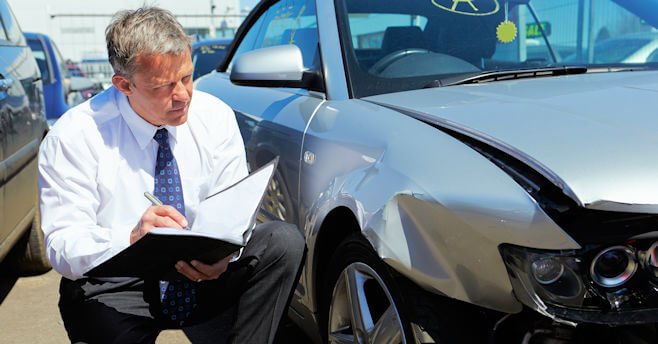
To start, let’s acknowledge first that no insurance coverage – including ‘full coverage’ – can protect you from every possible circumstance that could arise in the future. No matter how great your coverage is, there is always some degree of risk. However, the extent to which you carry insurance is an indication of how high that risk will be. If you carry a bare bones liability policy, you are accepting the fact that if your car is damaged in an accident, you are on your own. If all this talk about full coverage auto insurance has you confused, that’s okay. Continue reading at homewoodagency.com to learn more about full coverage auto insurance and whether it could be right for you.
Full Coverage is Protection for Your Car
The easiest way to think of full coverage insurance is by understanding that it offers protection to repair or replace your personal vehicle in the event of an accident or another type of loss. Unlike liability-only coverage, which only covers a victim’s property damage and bodily injuries, full coverage helps pay to repair or replace your vehicle when it is damaged. Furthermore, the damage can occur in nearly any way, from high winds and natural disasters to fender benders and major accidents.
It is often the case that lenders require borrowers to purchase full coverage auto insurance as part of a loan agreement. Under these agreements, borrowers are contractually obligated to maintain collision and comprehensive coverage in addition to liability. This assures the lender of the continuity of the vehicle’s value until the loan is paid in full.
Collision and comprehensive protection should provide payment at or near the actual value of your vehicle accounting for depreciation. Keep in mind that you will need to choose a deductible for your collision and comprehensive insurance. It should be something you could easily afford if you need to file a claim.
Remember that some perils are typically excluded from most insurance coverage. Examples include damages done to your vehicle while off-road driving, as well as those caused by racing. In other words, even “full-coverage” insurance doesn’t provide 100% coverage for all circumstances.
Making Full Coverage Even Better
So “Full Coverage” isn’t 100% coverage, what does the term “Full Coverage” mean? Generally speaking, it means that you have both physical damage coverage in the form of Comprehensive and Collision Coverage, as well as liability coverage by way of your Bodily Injury, Property Damage, Un-Insured Motorist, and Under-Insured Motorist Coverage.
Ideally, you would have every possible protection with the highest limits possible. We know that is not practical for all drivers, so we work hard to help our clients determine appropriate deductibles as well as limits.
If you are considering full coverage as a part of your auto insurance policy, let Homewood Insurance Agency in Madison assist you in making your decision. We can help you evaluate the benefits of coverage and compare rate quotes from multiple insurance companies. Contact us today to request your consultation. We look forward to serving you soon.


